
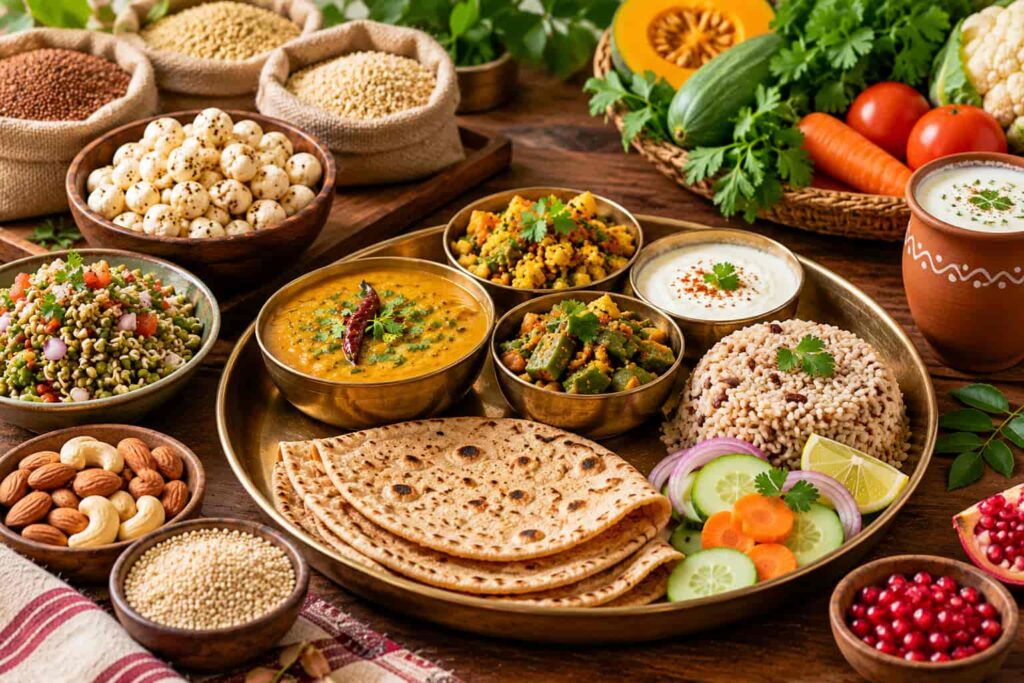
India’s traditional food culture offers several ingredients that can be used to prepare varied and satisfying snacks. Roasted chana, makhana, peanuts, murmura, millets, pulses, and seeds have long featured in regional eating habits. However, changing work schedules, urban lifestyles, and the growing availability of packaged foods are influencing how consumers choose snacks between meals.
Growing interest in nutrition is encouraging households and food manufacturers to reconsider familiar snack ingredients. Roasted and baked preparations, millet-based products, and pulse-based combinations are receiving greater attention as alternatives to frequently consumed fried snacks. Traditional ingredients are also finding new applications in snack bars, savoury mixes, biscuits, and ready-to-eat products.
The Food Safety and Standards Authority of India (FSSAI), through its Eat Right India initiative, encourages dietary diversity and moderation in the consumption of salt, sugar, and saturated fats. [1] Applying these principles to everyday snacking involves paying attention to ingredients, preparation methods, portion sizes, and nutritional information rather than relying only on product claims.
Traditional Ingredients Behind Healthier Indian Snacks
Table of Contents
Indian kitchens offer several familiar ingredients that can be used to prepare savoury snacks with different flavours, textures, and nutritional compositions. Makhana, roasted chana, millets, peanuts, murmura, and seeds are among the commonly used options. Their versatility allows households to prepare simple roasted mixtures, chivda, savoury bites, and other snacks without depending entirely on commercially packaged products.
Some traditional ingredients offer particular advantages when used thoughtfully:
- Makhana: Fox nuts are commonly roasted and seasoned with cumin, black pepper, turmeric, or other spices. Their light texture makes them suitable for homemade savoury mixtures, while measured quantities of oil help control added fat.
- Roasted chana: Chickpeas provide plant-based protein and dietary fibre. They can be consumed independently or combined with peanuts, spices, and curry leaves to prepare a simple savoury snack.
- Millets: Ragi, bajra, jowar, and other millets are finding applications in biscuits, roasted preparations, crackers, and snack mixes. Their use provides alternatives to conventional grain ingredients and introduces different textures and flavours.
- Peanuts and seeds: Peanuts, sesame seeds, flaxseeds, and pumpkin seeds can add crunch and nutritional variety to homemade snack mixtures. Since nuts and seeds are energy-dense, their quantities should be considered when preparing individual servings.
- Murmura: Puffed rice is widely used in Indian preparations such as bhel and chivda. Combining it with roasted chana, peanuts, curry leaves, and measured seasoning can create a simple savoury snack.
The preparation method also influences the final product. Roasting, baking, and pan-cooking offer alternatives to frequent deep-frying, although the nutritional composition still depends on the ingredients and quantities of added oil, salt, and seasoning. A snack made with traditional ingredients is not automatically a balanced choice, making preparation methods and portion sizes important considerations.
Millets Are Finding New Applications in Indian Snacks
Millets have been part of India’s regional food traditions for generations. Ragi, bajra, jowar, foxtail millet, and little millet have traditionally been used in different regional preparations. Their use is now extending into snack formats such as baked crackers, millet biscuits, roasted mixtures, and snack bars. These applications allow traditional grains to be incorporated into convenient products while retaining their characteristic flavours and textures.
Food research and product development are also creating new possibilities for millet-based snacks. The Indian Council of Agricultural Research’s Central Institute of Agricultural Engineering (ICAR-CIAE), Bhopal, has developed 23 millet-based products, including biscuits, roasted snacks, nutri-bars, and health mixes, alongside other food preparations. Some of the developed products have also entered commercialization. [2]
At the household level, millet flour can be used to prepare savoury crackers with ingredients such as cumin, sesame seeds, curry leaves, and other spices. Roasted millet preparations can also be combined with peanuts and roasted chana to create different snack mixtures. Such combinations provide alternatives to conventional snack ingredients while allowing households to experiment with familiar regional flavours.
However, the presence of millets does not automatically make a snack nutritionally superior. Added salt, sugar, cooking fats, processing methods, and portion sizes continue to influence the nutritional composition of the final product. Consumers should consider the complete ingredient list and nutritional information when selecting packaged millet-based snacks.
Pulses and Legumes Bring Variety to Indian Snacks
Pulses and legumes are widely used in Indian cooking and offer several ways to prepare savoury snacks. Chickpeas, green gram, black gram, and other legumes provide plant-based protein and dietary fibre. They can be used in roasted preparations, chaat, steamed snacks, and savoury mixtures, making them adaptable to different regional food preferences.
Some familiar Indian preparations demonstrate how these ingredients can be incorporated into snacks:
- Roasted chana: Roasted chickpeas are a convenient snack that can be eaten on their own or combined with peanuts, curry leaves, and spices. They can also be added to homemade savoury mixtures for additional texture.
- Chana chaat: Boiled chickpeas can be mixed with chopped cucumber, tomatoes, onions, coriander, lemon juice, and roasted cumin. This preparation combines legumes with fresh ingredients and can be adjusted according to individual taste.
- South Indian sundal: Commonly prepared using chickpeas, black chana, or other legumes, sundal involves cooking the pulses and tempering them with mustard seeds, curry leaves, green chillies, and grated coconut.
- Moong dal chilla: Soaked and ground moong dal can be combined with onions, coriander, and spices to prepare savoury pancakes. Smaller portions can be served as a snack rather than as a complete meal.
Preparation methods influence the final texture and nutritional composition of pulse-based snacks. Dried chickpeas and other hard legumes should be soaked and cooked thoroughly before use. Roasting, steaming, and pan-cooking can provide alternatives to deep-frying, while measured quantities of oil and salt help control the ingredients added during preparation.
Seasonal Fruits and Vegetables in Indian Snack Preparations
Seasonal vegetables and fruits can add variety to homemade Indian snacks while introducing different flavours, textures, and colours. Ingredients such as cucumber, tomatoes, carrots, onions, beetroot, guava, papaya, and oranges can be incorporated into familiar preparations without requiring complicated cooking methods.
Vegetables are commonly used in snacks such as bhel, chana chaat, and sprouts chaat. Chopped cucumber, tomatoes, onions, carrots, and coriander can be combined with boiled chickpeas or properly prepared sprouts, followed by lemon juice and roasted cumin for seasoning. These combinations offer flexibility because ingredients can be selected according to seasonal availability and personal preferences.
Fruits provide another option for preparing snacks between meals. Guava, papaya, oranges, pomegranate, and seasonal melons can be combined to prepare fruit chaat with a small amount of lemon juice and roasted cumin. Serving whole fruit rather than relying entirely on strained juices also helps retain its natural dietary fibre. The preparation method and seasoning remain important. Fresh ingredients should be washed properly, and the addition of salt, sweetened sauces, and packaged dressings should be considered carefully. Using seasonal produce and simple seasoning allows households to prepare different snack combinations while retaining familiar Indian flavours.
Fermented Preparations in Traditional Indian Snacks
Fermentation is an established food preparation method used in several Indian regional cuisines. Ingredients such as rice, urad dal, and other pulses are combined, ground, and allowed to ferment before being used in preparations such as dhokla, idli, and dosa. The process develops the characteristic flavour, texture, and appearance of these foods.
Gujarati dhokla is a familiar example of a fermented preparation that is commonly served as a snack. Its batter is prepared using ingredients such as gram flour or ground pulses, depending on the recipe, and cooked by steaming. It is generally served with coriander chutney or other accompaniments. Idli and dosa batter also uses combinations of rice and urad dal, offering further options for steamed or pan-cooked preparations.
These foods can be prepared using measured quantities of salt and cooking oil. Steaming, in particular, provides an alternative to deep-frying, while seasoning and accompaniments can be adjusted according to preference. However, fermentation alone does not determine the nutritional value of a preparation. The ingredients, quantities, cooking method, and serving size continue to influence the final dish.
Proper handling is important when preparing fermented foods at home. Clean utensils, suitable fermentation conditions, and appropriate storage help maintain food quality and reduce the risk of contamination.
Traditional Snacks Are Finding New Forms
Indian snacking habits are also creating opportunities to explore familiar ingredients in different ways. Roasted chana, makhana, peanuts, murmura, and homemade chivda have long been part of regional snack traditions. Today, these ingredients are appearing in new combinations, including baked, roasted, millet-based, and protein-focused preparations.
Markntel Advisors’ October 2026 India Snacks Market Research Report estimates the sector at USD 14.98 billion in 2026, rising to USD 16.48 billion in 2027. The report projects the sector to reach USD 24.33 billion by 2033, registering a CAGR of 6.71% during 2027–2033. It identifies healthy, better-for-you snacks as the fastest-growing product group, reflecting increased product development in millet-based, roasted, baked, and protein-focused formats. [3]
Preparing a Homemade Masala Makhana and Chana Snack
Roasted makhana and chana can be combined to prepare a savoury snack using ingredients commonly found in Indian kitchens. The preparation requires little cooking time and lets households adjust the seasoning and amount of added fat to their preferences.
Ingredients (2 servings):
- 30 g makhana (fox nuts)
- 30 g roasted chana
- 15 g raw peanuts
- 1 teaspoon ghee or cooking oil
- ½ teaspoon cumin seeds
- ⅛ teaspoon turmeric powder
- ⅛ teaspoon black pepper powder
- 6–8 curry leaves
- ⅛ teaspoon salt, or to taste
Preparation:
- Heat a thick-bottomed pan over low heat and add the makhana. Dry-roast them for around 5–7 minutes, stirring continuously until they become crisp. Transfer them to a plate.
- In the same pan, dry-roast the peanuts until lightly golden. Keep them aside.
- Add one teaspoon of ghee or cooking oil to the pan. Add cumin seeds and curry leaves, allowing them to release their aroma.
- Reduce the heat and add turmeric powder, black pepper, and salt. Stir briefly to distribute the seasoning.
- Add the roasted makhana, peanuts, and chana. Toss everything together over low heat until the ingredients are evenly coated.
- Switch off the heat and allow the mixture to cool before serving.
This preparation can be adjusted with different seasonings, such as roasted cumin powder or a small amount of red chilli powder. Preparing snacks at home also gives households greater control over added salt and cooking fat. However, portion sizes remain relevant because peanuts are energy-dense, and individual nutritional requirements vary.
Packaged snacks also deserve attention when consumers explore healthier alternatives. Products labelled as millet-based, baked, or protein-rich are not automatically balanced choices. Their nutritional composition depends on the ingredients, processing methods, and quantities of added fats, salt, and sugar. Checking the ingredient list and nutrition information for sodium, added sugar, saturated fat, and dietary fibre can help consumers make more informed purchasing decisions.
Practical Ways to Prepare Healthier Indian Snacks
The ingredients used in a snack are important, but preparation methods also influence its nutritional composition. Traditional Indian ingredients such as makhana, chana, peanuts, millets, and seeds can be prepared in different ways to create savoury snacks with varied flavours and textures. A few practical adjustments can help households manage the amount of oil, salt, and added sugar used in homemade preparations.
Some useful practices include:
- Measure cooking oil: Use a measured quantity of oil or ghee instead of pouring it directly from the bottle. This helps maintain consistency when preparing roasted mixtures, chivda, and other savoury snacks.
- Explore roasting and baking: Roasting makhana, chana, peanuts, and other ingredients can provide alternatives to deep-fried preparations. Baking can also be used for homemade millet crackers and savoury snacks.
- Use spices for flavour: Ingredients such as cumin, black pepper, turmeric, curry leaves, coriander, and chilli can add flavour to homemade mixtures. This allows households to adjust seasoning without depending entirely on salt.
- Control added salt and sugar: Measure the quantities used in homemade snacks, chutneys, and sweet preparations. Packaged products should also be checked for their sodium and added-sugar content.
- Combine different ingredients: Mix roasted chana with makhana, peanuts, puffed rice, or seeds to create different textures and flavours. Using varied ingredients also provides alternatives to relying on a single snack item.
- Pay attention to serving quantities: Peanuts, nuts, and seeds contain concentrated energy, so their quantities should be considered when preparing individual snack portions.
- Maintain proper storage: Allow roasted snacks to cool before transferring them into clean, airtight containers. Store perishable ingredients and prepared foods under suitable conditions to maintain food quality and safety.
These practices allow households to experiment with familiar Indian ingredients while having greater control over the preparation and seasoning of homemade snacks.
Making Traditional Ingredients Part of Everyday Snacking
Traditional Indian ingredients offer several possibilities for preparing snacks that reflect familiar regional flavours and changing food preferences. Makhana, roasted chana, peanuts, millets, pulses, and seeds can be used in homemade savoury mixtures, baked preparations, and other snack formats. Their versatility also gives households opportunities to explore different combinations without relying entirely on commercially packaged products.
Growing interest in roasted, baked, millet-based, and protein-focused snacks is encouraging food manufacturers to develop products using traditional ingredients in new formats. At home, simple preparations such as masala makhana, chana mixtures, sundal, and chana chaat demonstrate how familiar foods can be adapted for different snacking occasions.
Making considered snack choices requires attention to the complete preparation rather than focusing on a single ingredient or product claim. Cooking methods, added salt, sugar, saturated fats, and serving quantities all influence the final choice. By combining traditional ingredients thoughtfully and checking packaged-food information, consumers can explore a wider variety of Indian snacks while paying greater attention to their everyday eating habits.
References
[1] Food Safety and Standards Authority of India (FSSAI). Eat Right India: Key Themes.
https://eatrightindia.gov.in/EatRightIndia/key-themes.jsp
[2] Indian Council of Agricultural Research (ICAR). ICAR-CIAE, Bhopal Develops Innovative Millet Food Baskets for Value Addition and Income Generation.
https://www.icar.gov.in/en/icar-ciae-bhopal-develops-innovative-millet-food-baskets-value-addition-and-income-generation
[3] Markntel Advisor. India Snacks Market Research Report: Size, Share, Trends & Forecast (2027–2033). October 2026.
https://www.marknteladvisors.com/research-library/india-snacks-market-study.html
About the Author
Shammi Thakur is Research Director at Markntel Advisor, where he leads industry research and competitive analysis across global sectors, delivering data-driven insights into emerging technologies, consumer trends, competitive landscapes, and business opportunities.