
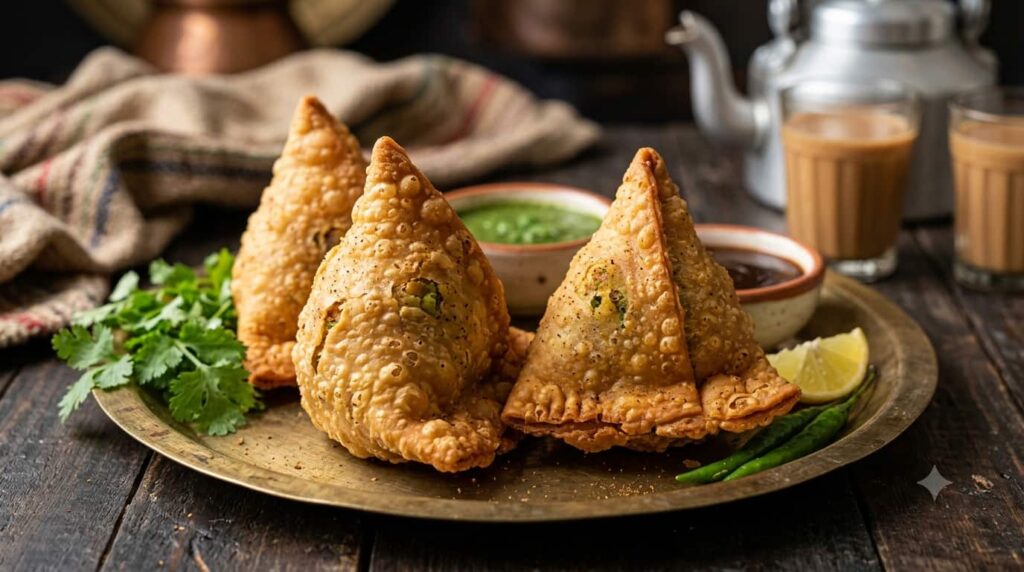
There’s a reason samosas never go out of fashion. Hot chai, rainy weather, a plate of crispy samosas, and honestly, life feels sorted. If you’ve only ever had samosas from the local halwai or a restaurant, wait till you try a homemade batch. Once you get the hang of it, this samosa recipe will spoil you for store-bought ones forever.
This is a classic Punjabi potato samosa recipe – the kind with a flaky, crunchy shell and a warm, spiced potato filling that hits every note it should: a little tangy, a little spicy, and deeply comforting. I’ve made these more times than I can count, and I’m sharing every small detail that actually makes a difference, from getting the dough right to frying the samosas so they stay crisp for hours.
No fancy equipment needed. Just a rolling pin, a kadhai, and a bit of patience.
What Makes This Punjabi Samosa Recipe Different
Table of Contents
Most samosa recipes either rush through the dough or skip the reasons behind each step. Here, you’ll understand why the dough needs to be stiff, why the oil temperature matters so much, and why your samosas might be turning soft or oily. That’s the difference between a samosa that looks right and one that actually tastes like it came from a Punjabi halwai’s kitchen.
Ingredients You’ll Need
For the Samosa Dough (Outer Covering)
- 2 cups (250 g) all-purpose flour (maida)
- 1/2 teaspoon salt
- 1/2 teaspoon carom seeds (ajwain), lightly crushed between your palms
- 4 tablespoons ghee or oil (this is the “moyan” – don’t skip or reduce it)
- 6-7 tablespoons cold water, or as needed to bind the dough
For the Spiced Potato Filling
- 4 medium potatoes (about 500 g), boiled and cooled
- 1/2 cup green peas, boiled or fresh
- 2 tablespoons oil or ghee
- 1 teaspoon cumin seeds
- 1 teaspoon fennel seeds, coarsely crushed
- 1 teaspoon coriander seeds, coarsely crushed
- 1-inch ginger, finely chopped or grated
- 1-2 green chillies, finely chopped
- 1/4 teaspoon asafoetida (hing)
- 1/2 teaspoon turmeric powder
- 1 teaspoon red chilli powder
- 1 tablespoon coriander powder
- 1 teaspoon dry mango powder (amchur), adjust to taste
- 1 teaspoon garam masala
- 1 tablespoon chopped coriander leaves
- 1 tablespoon raisins and cashews (optional, but very Punjabi-style)
- Salt to taste
For Frying
- Oil, enough for deep frying (around 2-3 cups depending on your kadhai)
A quick note on potatoes: boil them a few hours ahead and let them cool completely before mashing. Warm potatoes release extra moisture and make the filling sticky, which affects how crisp your samosas turn out.
How to Make Punjabi Samosa (Step-by-Step)
Step 1: Make the Dough
In a large mixing bowl, combine the flour, salt, and crushed ajwain. Add the ghee and rub it into the flour using your fingertips until the mixture looks like coarse breadcrumbs. This step is what gives samosas their signature flaky layers, so take your time with it – about 3-4 minutes of rubbing is ideal.
Now add cold water, a little at a time, and bring the mixture together into a dough. You’re aiming for a dough that’s stiff and firm, not soft like roti dough. A stiffer dough is what keeps the samosa’s shape sharp and prevents it from puffing up with air bubbles while frying.
Knead just until it comes together smoothly – don’t overwork it. Cover the dough with a damp cloth and let it rest for 20-30 minutes.
Step 2: Prepare the Filling
Boil the potatoes until fork-tender, then peel and mash them coarsely. You want some texture here, not a smooth mash.
Heat oil or ghee in a pan. Add the cumin seeds, crushed fennel, and coriander seeds. Once they sizzle, add the ginger and green chillies, and sauté for a few seconds until the raw smell disappears.
Add the asafoetida, turmeric, red chilli powder, and coriander powder. Stir for a few seconds on low heat so the spices don’t burn.
Now add the mashed potatoes and peas. Mix everything well, making sure the spices coat the potatoes evenly. Add the amchur, garam masala, salt, and raisins or cashews if using. Cook for 2-3 minutes on low flame, stirring gently, then finish with fresh coriander leaves.
Taste and adjust the seasoning – the filling should taste slightly tangy and well-spiced on its own, since it won’t get any extra flavour after being sealed inside the dough. Let it cool completely before filling the samosas.
Step 3: Shape the Samosas
Divide the rested dough into 6-8 equal balls. Roll each ball into an oval, about 6-7 inches long, and not too thin (roughly 2-3 mm thick).
Cut the oval in half to get two semi-circles. Take one semi-circle and fold it into a cone shape, sealing the straight edge with a little water. Press the seam firmly so it doesn’t open while frying.
Fill the cone generously with the potato mixture (about 2 tablespoons per samosa), leaving a small margin at the top. Apply water along the open edge and pinch it shut, creating a firm seal. Make sure there are no gaps, or oil will seep in during frying.
Repeat with the remaining dough and filling.
Step 4: Fry the Samosas
Heat oil in a kadhai on medium heat. This is the step most people rush, and it’s the one that decides whether your samosas turn out crisp or greasy.
The oil should be moderately hot, not smoking. A good way to check: drop a small piece of dough in – it should rise slowly to the top in about 8-10 seconds, not immediately.
Gently slide in the samosas, a few at a time without overcrowding the kadhai. Fry on low to medium heat for 12-15 minutes, turning occasionally, until they turn golden brown and crisp on all sides.
Frying slowly on low-medium heat is the real secret here. High heat browns the outside fast but leaves the inside doughy and undercooked.
Remove with a slotted spoon and drain on a wire rack or paper towels.
Cooking Time at a Glance
| Stage | Time |
| Prep (dough + filling) | 30 minutes |
| Dough resting time | 20-30 minutes |
| Shaping samosas | 20 minutes |
| Frying | 20-25 minutes |
| Total time | About 1 hour 30 minutes |
This recipe makes 12-14 medium samosas.
Baked and Air-Fried Versions
Want a lighter option? Here’s how to adapt this same recipe.
Air Fryer: Brush the shaped samosas lightly with oil and air fry at 180°C (360°F) for 15-18 minutes, flipping halfway, until golden and crisp.
Oven-Baked: Preheat the oven to 200°C (400°F). Brush the samosas with oil and bake for 25-30 minutes, turning once, until crisp and golden.
Keep in mind, both methods give you a crunchy texture but won’t fully replicate the deep-fried flakiness of a traditional samosa. That’s just the nature of the halwai-style crust.
What to Serve with Samosas
Samosas are best enjoyed fresh and hot, paired with:
- Mint-coriander chutney
- Tamarind (imli) chutney
- A cup of masala chai
- Or turned into samosa chaat – broken samosas topped with chole, chutneys, yoghurt, and sev
Common Mistakes to Avoid
Using a soft dough: If the dough is too soft, the samosas will absorb excess oil and turn out soggy instead of crisp.
Skipping the moyan (ghee/oil in dough): This fat is what creates the flaky layers. Don’t cut it down to save calories – it genuinely changes the texture.
Not sealing the edges properly: Loose seams let filling leak out or let oil seep into the samosa, making it greasy.
Frying on high heat: This browns the samosa quickly but leaves the inside raw and doughy. Always fry on low-medium heat.
Overfilling: Too much filling makes sealing difficult and increases the chances of the samosa bursting open while frying.
Filling the samosa while it’s hot: Always let the potato filling cool down completely before stuffing, or the dough will turn soggy.
Variations You Can Try
- Keema Samosa: Swap the potato filling with spiced minced meat (chicken or mutton) for a non-vegetarian version.
- Paneer Samosa: Add crumbled paneer to the potato mixture for a richer filling.
- Mini Samosas: Perfect for parties – just divide the dough into smaller portions.
- Onion-Garlic Free Filling: A popular Jain-style version that’s just as flavourful with the right spice balance.
Storage and Make-Ahead Tips
Unfried samosas: Once shaped, you can refrigerate them (covered) for up to a day, or freeze them for up to a month. Fry directly from frozen – no need to thaw – just add a couple of extra minutes to the frying time on low heat.
Fried samosas: Store in an airtight container in the fridge for 2-3 days. Reheat in an oven or air fryer at 180°C for 8-10 minutes to bring back the crunch. Avoid microwaving, as it makes them soft and chewy.
The filling alone can be made up to 2 days in advance and refrigerated separately.
Frequently Asked Questions
This usually happens when the dough is too soft or the oil isn’t hot enough when you start frying. A stiff dough and moderately hot oil (not smoking) are key to a crisp result.
You can use oil instead of ghee, but the ratio should stay the same – around 4 tablespoons of fat for 2 cups of flour. Ghee does give a slightly richer flavour and better flakiness.
Yes, though the texture will be less flaky and slightly denser. A mix of half wheat flour and half maida works well if you want a healthier version without losing too much texture.
Fry them slowly on low-medium heat, drain excess oil properly on a wire rack, and store them uncovered until fully cooled before packing.
Yes. Shape the samosas and refrigerate or freeze them uncooked. Fry them fresh just before serving for the best texture.
Final Thoughts
Once you make this samosa recipe a couple of times, you’ll notice how much control you have over the taste and crispiness – something you just don’t get with store-bought samosas. Take your time with the dough, don’t skip the resting step, and fry low and slow. That’s really the whole secret.
Try this recipe the next time it rains, or whenever you’re craving something warm, crunchy, and deeply comforting. And if you do make it, I’d love to know how your samosas turned out!

Meena Devi is a home cook and recipe creator who has been cooking and sharing traditional Indian recipes since 2005. With years of hands-on experience in the kitchen, she loves turning everyday ingredients into simple, flavorful dishes that anyone can make at home.
Her recipes are based on tried-and-tested cooking methods, family favorites, and the everyday food she has prepared over the years. Through Sawad India Ka, Meena shares practical recipes, helpful cooking tips, and the flavors she grew up with.