
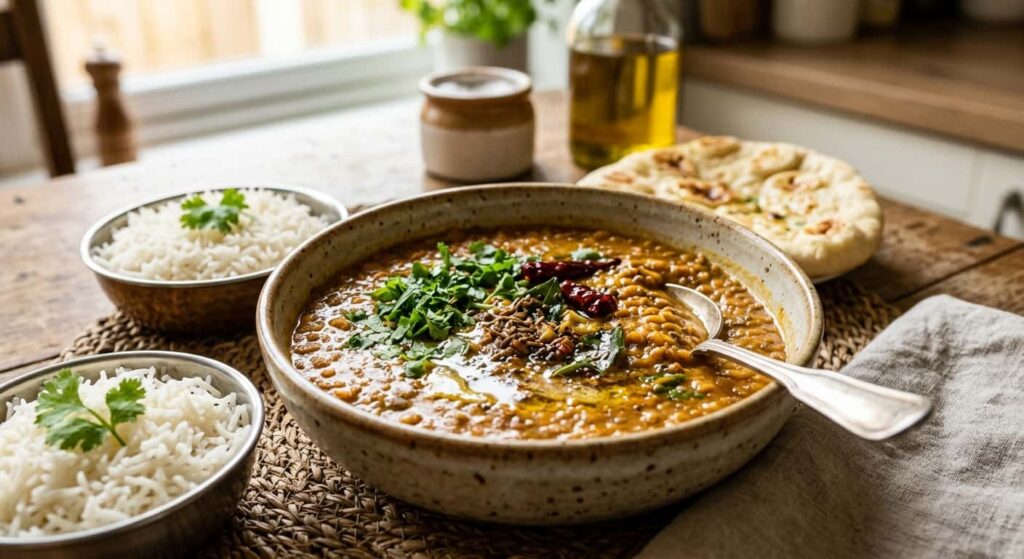
If you’ve had a long day and don’t feel like standing in the kitchen for an hour, this easy masoor dal recipe is going to become your best friend. It’s one of those dals that comes together in under 30 minutes, needs almost no chopping, and still tastes like something your grandmother would approve of.
Masoor dal, or red lentil dal, is probably the most forgiving lentil there is. It cooks fast, doesn’t need soaking, and turns soft and creamy almost on its own. Whether you’re new to Indian cooking or just want a quick weeknight dinner, this protein-rich red lentil curry is hard to mess up.
I’ve tested this recipe on the stovetop, in a pressure cooker, and in an Instant Pot, so pick whichever method suits your kitchen. Let’s get into it.
What Is Masoor Dal?
Table of Contents
Masoor dal is the Hindi name for split red lentils. In their whole form, these lentils are actually brown or greenish on the outside. Once they’re split and the skin is removed, they turn a warm orange-pink colour, which is why people also call this dish red lentil dal.
The best part about masoor dal is that it doesn’t hold its shape once cooked. It breaks down into a soft, almost creamy texture, which makes it perfect for a comforting curry that pairs well with rice or roti.
Why This Recipe Works
- No soaking needed – unlike chana dal or rajma, masoor dal cooks straight from dry.
- Ready in 25-30 minutes, start to finish.
- One-pot method, so there’s barely any cleanup.
- Naturally vegetarian and vegan-friendly (just swap ghee for oil).
- High in protein and fibre, making it a solid everyday meal for vegetarians.
- Uses everyday Indian pantry staples -nothing fancy required.
Ingredients You’ll Need
This recipe serves 3-4 people as a side dish, or 2 people as a main with rice.
For the dal:
- 1 cup split masoor dal (red lentils), washed
- 3 cups water (adjust for desired consistency)
- 1/2 teaspoon turmeric powder
- Salt to taste
For the tempering (tadka):
- 2 tablespoons ghee or oil
- 1 teaspoon cumin seeds
- 1/2 teaspoon mustard seeds (optional)
- 1 small onion, finely chopped
- 2-3 garlic cloves, finely chopped or crushed
- 1/2 inch ginger, grated
- 1 green chilli, slit (adjust to taste)
- 1 medium tomato, finely chopped
- 1/2 teaspoon red chilli powder
- 1/2 teaspoon coriander powder
- A pinch of asafoetida (hing) -optional but recommended
- 2 tablespoons fresh coriander leaves, chopped, for garnish
How to Make Easy Masoor Dal (Step-by-Step)
Step 1: Wash the lentils
Rinse the masoor dal 2-3 times under running water until the water runs mostly clear. This removes excess starch and any dust, and helps the dal cook up smoother.
Step 2: Cook the lentils
Add the washed dal to a pot along with 3 cups of water, turmeric powder, and salt. Bring it to a boil, then lower the heat and let it simmer for 15-18 minutes, stirring occasionally, until the lentils turn soft and mushy. Skim off any foam that rises to the top.
If you’re using a pressure cooker, cook on medium heat for 3-4 whistles. In an Instant Pot, use the manual/pressure cook setting for 6-7 minutes on high, followed by a natural release.
Step 3: Prepare the tempering
While the dal simmers, heat ghee or oil in a small pan. Add cumin seeds and mustard seeds, and let them sputter for a few seconds. Add the chopped onion and sauté until it turns light golden.
Step 4: Add aromatics and spices
Stir in the ginger, garlic, and green chilli, and cook for about a minute until the raw smell disappears. Add the chopped tomato, red chilli powder, coriander powder, and hing. Cook this mixture until the tomatoes turn soft and the oil starts to separate at the edges, about 4-5 minutes.
Step 5: Combine and simmer
Pour this tempering over the cooked dal and mix well. Let everything simmer together for 3-4 minutes so the flavours blend in. Adjust the consistency by adding hot water if the dal looks too thick, or let it simmer a bit longer if it feels too watery.
Step 6: Garnish and serve
Turn off the heat, stir in fresh coriander leaves, and your masoor dal is ready. A small squeeze of lemon juice at the end lifts the flavour beautifully.
Cooking Time at a Glance
| Method | Cooking Time |
| Stovetop (open pot) | 25-30 minutes |
| Pressure Cooker | 15-18 minutes |
| Instant Pot | 20 minutes (including pressure build-up) |
What to Serve With Masoor Dal
This red lentil dal pairs well with almost anything:
- Steamed basmati rice or jeera rice
- Roti, phulka, or paratha
- A side of papad and pickle
- A simple cucumber-onion salad (kachumber)
- A dollop of ghee on top, right before serving, for extra richness
Tips for the Best Masoor Dal
- Don’t skip washing the dal -it removes excess starch and prevents the dal from tasting flat.
- Add the tempering hot -pouring hot tadka over the dal helps release the aroma of the spices instantly.
- Mash lightly for a creamier texture -if you like your dal extra smooth, mash it a bit with the back of a spoon or a whisk before adding the tempering.
- Balance the tang -a squeeze of lemon or a small piece of tamarind at the end cuts through the richness nicely.
- Use fresh spices -old, stale spice powders can make the dal taste dull even if you follow every step correctly.
Common Mistakes to Avoid
- Using too little water: Masoor dal thickens as it cools, so it’s better to keep it slightly thinner while cooking.
- Skipping the tempering step: The tadka is what gives this dal its flavour -don’t skip it, even if you’re short on time.
- Adding salt too early with tomatoes: This can sometimes make lentils take longer to soften. It’s safer to add salt at the start with just water and lentils.
- Overcooking the tempering onions: Burnt onions or garlic can make the whole dal taste bitter, so keep the heat moderate.
- Not adjusting consistency at the end: Dal thickens as it sits, so always check and loosen it with hot water just before serving.
Variations You Can Try
- Coconut Masoor Dal: Add a splash of coconut milk at the end for a South Indian-style creamy twist.
- Spinach Masoor Dal: Stir in a handful of chopped spinach during the last 5 minutes of cooking for extra nutrition.
- No-Onion No-Garlic Version: Skip the onion and garlic, and simply temper with cumin, hing, and tomatoes -a popular Jain-friendly variation.
- South Indian Style: Add curry leaves and a pinch of mustard seeds along with dried red chillies in the tempering.
- Restaurant-Style Dal Tadka: Finish with a second tempering of ghee, whole red chillies, and crushed garlic right before serving for that dhaba-style flavour.
Storage Instructions
Masoor dal stores well and actually tastes even better the next day, once the spices settle in.
- Refrigerator: Store in an airtight container for up to 3-4 days.
- Freezer: Freeze in freezer-safe containers or bags for up to 2 months. Thaw overnight in the fridge before reheating.
- Reheating: Add a splash of water while reheating on the stove or in the microwave, since the dal thickens as it sits.
Nutritional Benefits of Masoor Dal
Red lentils are one of the most protein-rich foods in a vegetarian diet. A single cup of cooked masoor dal offers a good dose of plant protein, fibre, iron, and folate, while being naturally low in fat. This makes it a smart, budget-friendly choice for anyone looking to eat healthier without giving up flavour.
Frequently Asked Questions
No. Unlike most other lentils, masoor dal doesn’t need soaking. It cooks quickly even when added directly to boiling water.
This usually happens when the tempering is skipped or added too late. Make sure to pour the hot tadka over the dal and let it simmer together for a few minutes so the flavours mix in properly.
Yes, this recipe works perfectly well on the stovetop in an open pot. It just takes a little longer, around 25-30 minutes, compared to a pressure cooker.
Yes, it’s low in fat, high in protein and fibre, and keeps you full for longer, making it a good addition to a weight-conscious diet.
Absolutely. Just replace the ghee with any neutral oil, and the rest of the recipe stays the same.
Masoor dal is red lentils with a slightly nuttier, earthier taste, while moong dal is milder and cooks even faster. Both are common in everyday Indian cooking, but masoor dal has a more robust flavour once tempered.
It stays fresh for 3-4 days when stored in an airtight container in the refrigerator
This easy masoor dal recipe proves that comfort food doesn’t need to be complicated. With just a handful of pantry ingredients and half an hour, you get a warm, protein-rich red lentil curry that works for busy weeknights and lazy Sundays alike. Once you get the hang of the tempering, you’ll find yourself making this dal on repeat.

Meena Devi is a home cook and recipe creator who has been cooking and sharing traditional Indian recipes since 2005. With years of hands-on experience in the kitchen, she loves turning everyday ingredients into simple, flavorful dishes that anyone can make at home.
Her recipes are based on tried-and-tested cooking methods, family favorites, and the everyday food she has prepared over the years. Through Sawad India Ka, Meena shares practical recipes, helpful cooking tips, and the flavors she grew up with.