
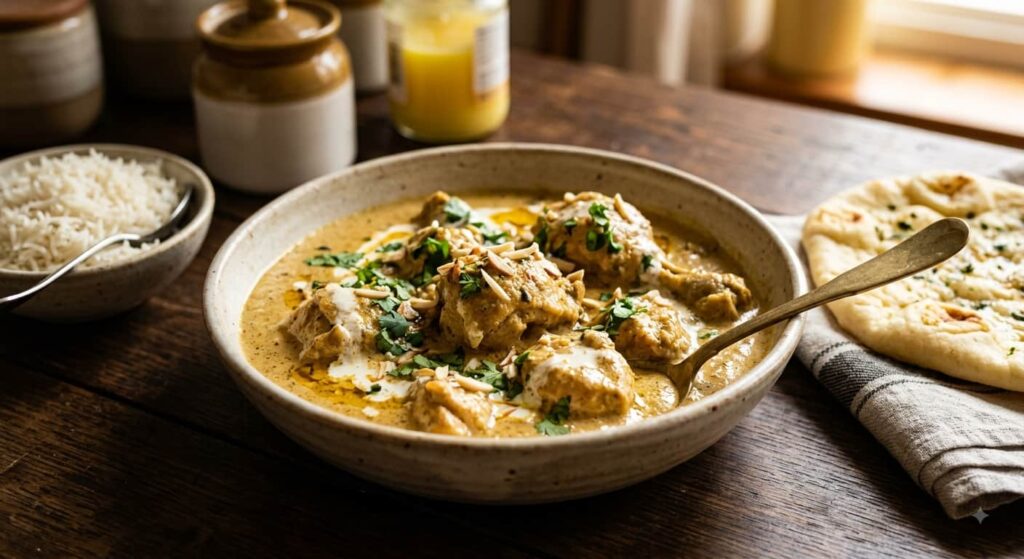
If there’s one curry that never fails to impress at the dinner table, it’s chicken korma. It’s rich, it’s mildly spiced, and that cashew-yogurt gravy is downright addictive with hot phulkas or steamed rice. The best part? You don’t need to be an expert cook to get it right.
This easy chicken korma recipe uses everyday pantry spices, a simple marination step, and a foolproof method for that silky, restaurant-style gravy. No fancy equipment, no hard-to-find ingredients -just a recipe that actually works every single time.
Let’s get into it.
What Is Chicken Korma?
Table of Contents
Korma is a Mughlai-style curry where meat (or vegetables) is braised slowly in a gravy made from yogurt, cream, and ground nuts like cashews or almonds. Unlike red curries that lean on tomatoes and chilies, korma is all about a mellow, nutty, and slightly sweet flavor profile. It’s the curry you make when you want something comforting rather than fiery.
Because it’s mild, korma is a favorite for family dinners, kids, and anyone who isn’t big on heat -but it’s also special enough to serve when guests are over.
Why This Recipe Works
- Beginner-friendly -the steps are broken down clearly, so even first-time cooks won’t feel lost.
- No fried onion paste needed -most traditional recipes ask you to deep-fry onions separately, which takes time. This version skips that step without losing flavor.
- Balanced creaminess -a mix of cashews and yogurt gives the gravy body without making it feel heavy or overly rich.
- Ready in under an hour -including marination time, which mostly happens while you prep everything else.
Ingredients You’ll Need
Here’s everything you need to make chicken korma for 4 people.
For Marinating the Chicken
- 500 g chicken (curry-cut, bone-in or boneless, your choice)
- 1/2 cup thick curd (yogurt)
- 1 tsp ginger-garlic paste
- 1/2 tsp turmeric powder
- 1/2 tsp red chili powder
- Salt to taste
For the Korma Paste
- 12-15 cashew nuts
- 1 tbsp poppy seeds (khus khus) -optional, but adds nice body to the gravy
- 2 tbsp warm water or milk (for soaking)
For the Gravy
- 3 tbsp ghee or oil
- 1 bay leaf
- 2 green cardamom pods
- 1 small cinnamon stick
- 2-3 cloves
- 2 medium onions, thinly sliced
- 1 tsp ginger-garlic paste
- 2 green chilies, slit
- 1/2 tsp turmeric powder
- 1 tsp coriander powder
- 1/2 tsp red chili powder (adjust to taste)
- 1 tsp garam masala
- 1/2 cup beaten curd
- 1 cup water (adjust for desired consistency)
- 2 tbsp fresh cream
- Salt to taste
- Fresh coriander leaves, for garnish
A quick note on measurements: 1 cup = 250 ml in this recipe. If your gravy turns out thicker or thinner than you’d like, that’s completely normal -just adjust the water in small amounts until it looks right to you.
How to Make Chicken Korma (Step-by-Step)
Step 1: Marinate the Chicken
In a bowl, mix the chicken with curd, ginger-garlic paste, turmeric, red chili powder, and salt. Cover and set aside for at least 30 minutes. If you have time, marinating for 2-3 hours in the fridge gives even better results, as the chicken turns out more tender.
Step 2: Prepare the Cashew Paste
While the chicken marinates, soak the cashews and poppy seeds in warm water or milk for 20 minutes. Once softened, blend them into a smooth, lump-free paste. This paste is what gives the korma its signature creamy texture, so don’t skip it.
Step 3: Sauté the Whole Spices and Onions
Heat ghee in a heavy-bottomed pan or kadhai. Add the bay leaf, cardamom, cinnamon, and cloves. Let them sizzle for about 30 seconds until fragrant -this releases their oils into the ghee and builds the base flavor.
Add the sliced onions and cook on medium heat, stirring often, until they turn golden brown. This usually takes 8-10 minutes. Take your time here; golden onions are key to a good korma.
Step 4: Build the Masala
Add the ginger-garlic paste and green chilies. Sauté for a minute until the raw smell disappears. Lower the heat and add turmeric, coriander powder, and red chili powder. Cook the spices for 30-40 seconds, stirring constantly so they don’t burn.
Step 5: Cook the Chicken
Add the marinated chicken to the pan and mix well so it’s coated in the masala. Cook on medium-high heat for 5-6 minutes, stirring occasionally, until the chicken changes color and releases some of its juices.
Step 6: Add the Cashew Paste and Curd
Lower the heat to prevent the curd from splitting, then add the beaten curd one spoon at a time, stirring continuously. Once fully mixed in, stir in the cashew-poppy seed paste. Cook for 2-3 minutes on low heat.
Step 7: Simmer the Gravy
Add water to reach your preferred consistency, then cover and simmer on low heat for 15-20 minutes, stirring occasionally, until the chicken is fully cooked and tender.
Step 8: Finish with Cream and Garam Masala
Turn off the heat, stir in the fresh cream and garam masala. Let the korma sit covered for 5 minutes before serving -this helps all the flavors settle together.
Garnish with fresh coriander leaves and serve hot.
Cooking Time at a Glance
| Stage | Time |
| Marination | 30 minutes (up to 3 hours) |
| Prep (onions, paste, chopping) | 15 minutes |
| Cooking | 30-35 minutes |
| Total Time | 45-50 minutes (active) |
What to Serve with Chicken Korma
Chicken korma pairs beautifully with:
- Steamed basmati rice or jeera rice
- Butter naan or tandoori roti
- Plain paratha
- A side of cucumber raita to balance the richness
- Sliced onions and lemon wedges on the side
If you’re planning a special dinner, korma also works wonderfully as part of a larger spread alongside a dal and a dry vegetable side.
Tips for the Best Chicken Korma
- Use full-fat curd. Low-fat or watery curd tends to split faster and gives a thinner gravy.
- Keep the flame low when adding curd. This is the single biggest reason gravies curdle. Low heat and continuous stirring prevent that.
- Don’t rush the onions. Golden, well-cooked onions add natural sweetness and body to the gravy -undercooked onions leave a raw taste behind.
- Soak cashews properly. A smooth paste blends into the gravy seamlessly; a grainy paste will leave your korma with a slightly gritty texture.
- Adjust spice level gradually. Korma is meant to be mild, so add chili powder in small amounts and taste as you go.
- Let it rest before serving. Like most curries, chicken korma tastes even better 10-15 minutes after cooking, once the flavors have had a chance to combine.
Common Mistakes to Avoid
- Adding curd on high heat -this is the most common reason for a split or grainy gravy. Always lower the flame first.
- Skipping the marination -even 30 minutes makes a noticeable difference in how tender the chicken turns out.
- Using pre-ground, stale spices -korma’s flavor depends heavily on fresh spices. If your masala box has been open for months, it’s worth restocking before you cook this.
- Overcooking the chicken -especially with boneless chicken, which can turn rubbery if left on high heat for too long.
- Adding cream too early -cream should go in at the end, off the heat, so it doesn’t split or lose its richness.
Variations You Can Try
- Vegetable Korma: Swap chicken for mixed vegetables like potatoes, carrots, beans, and peas. Reduce the simmering time to 10-12 minutes since vegetables cook faster.
- Coconut Chicken Korma: Replace the cashew paste partly with coconut paste or coconut milk for a South Indian twist.
- Almond Korma: Use soaked almonds instead of cashews for a slightly different nutty flavor.
- Dairy-Free Version: Substitute curd and cream with coconut milk for a lactose-free alternative that’s still creamy.
- Slow Cooker Korma: After Step 5, transfer everything to a slow cooker and cook on low for 3-4 hours instead of simmering on the stove.
Storage Instructions
Refrigerator: Store leftover korma in an airtight container for up to 3 days. Reheat gently on the stovetop over low heat, adding a splash of water or milk if the gravy has thickened too much.
Freezer: Chicken korma freezes reasonably well for up to a month. For best texture, freeze it before adding the cream, then stir in fresh cream while reheating after thawing.
Reheating tip: Always reheat on low heat and avoid boiling vigorously, as this can cause the gravy to separate.
Frequently Asked Questions
No, chicken korma is one of the mildest Indian curries. It’s meant to be creamy and aromatic rather than hot, though you can add extra chili powder if you prefer more heat.
Chicken curry usually has a tomato-based, spicier gravy, while korma relies on yogurt, cream, and ground nuts for a milder, richer sauce.
Yes. You can replace cashews with almonds, melon seeds, or even a bit of coconut for a similar creamy texture, though the flavor will vary slightly.
This usually happens when curd or cream is added on high heat. Always lower the flame before adding dairy, and stir continuously as you incorporate it.
Absolutely. Boneless chicken cooks faster, so reduce the simmering time by about 5 minutes to avoid overcooking it.
For a thicker gravy, simmer uncovered for a few extra minutes to reduce the liquid. For a thinner gravy, simply add a little more water or milk while reheating.
Yes, korma actually tastes better the next day as the flavors deepen. You can make it a day ahead and reheat gently before serving.
Final Thoughts
Chicken korma might sound like a restaurant-only dish, but once you’ve made it at home a couple of times, it becomes one of those recipes you can whip up without even glancing at the ingredient list. Take your time with the onions, keep the heat low when adding curd, and you’ll have a bowl of rich, creamy korma that tastes just as good as -if not better than -your favorite takeout.
Give this easy chicken korma recipe a try this week, and don’t forget to pair it with warm naan or fluffy basmati rice for the full experience

Meena Devi is a home cook and recipe creator who has been cooking and sharing traditional Indian recipes since 2005. With years of hands-on experience in the kitchen, she loves turning everyday ingredients into simple, flavorful dishes that anyone can make at home.
Her recipes are based on tried-and-tested cooking methods, family favorites, and the everyday food she has prepared over the years. Through Sawad India Ka, Meena shares practical recipes, helpful cooking tips, and the flavors she grew up with.