
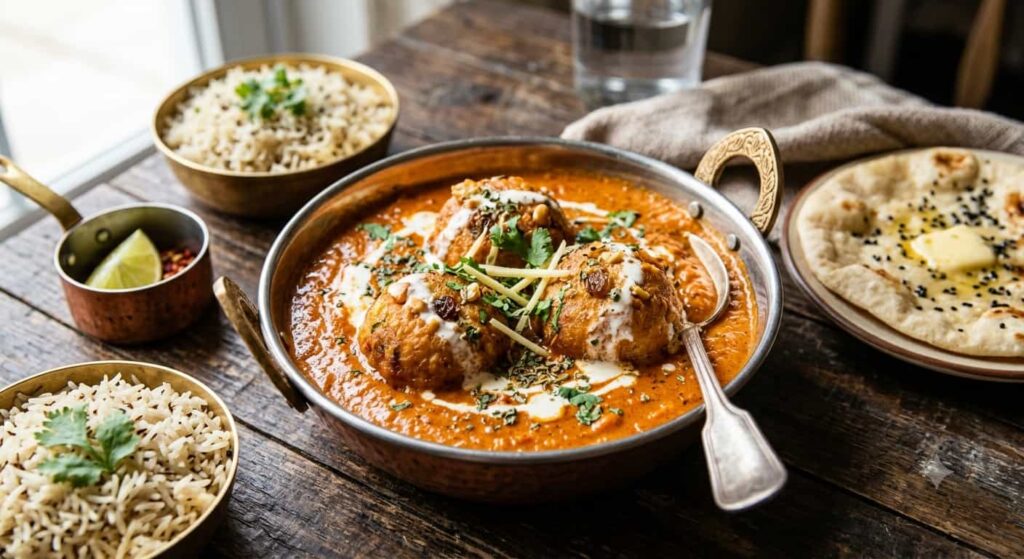
If there’s one dish that makes everyone go quiet at the dinner table (in a good way), it’s malai kofta. Soft, golden paneer-potato balls sitting in a rich, creamy, slightly sweet curry – it’s the dish most of us order the moment we spot it on a restaurant menu. The good news? You don’t need a restaurant kitchen to make it taste just as good, maybe better, at home.
This malai kofta recipe is the one I’ve made for years, tweaked after more than a few kofta-falling-apart disasters. I’ll walk you through exactly how to get koftas that hold their shape, a gravy that’s smooth without a single lump, and a final dish that tastes like it came straight from your favourite Punjabi restaurant.
What Is Malai Kofta?
Table of Contents
Malai kofta is a North Indian curry made of two parts – the kofta (fried dumplings) and the malai (cream-based gravy). The koftas are usually made from a mix of grated paneer and mashed potato, sometimes stuffed with chopped nuts and raisins, then deep-fried until golden. These are dunked in a velvety onion-tomato-cashew gravy finished with cream.
The dish has its roots in Mughlai cuisine, where kofta originally referred to spiced meatballs. Over time, the vegetarian version made with paneer and potato became a staple on Indian restaurant menus, especially in North India, and today it’s one of the most-ordered vegetarian curries at weddings, parties, and special family dinners.
It’s rich, no doubt about it. So don’t expect this to be your everyday weeknight curry – it’s the one you make when you want to impress someone, including yourself.
Malai Kofta Recipe At a Glance
- Prep time: 30 minutes
- Cook time: 40 minutes
- Total time: 70 minutes
- Serves: 4 people (makes about 14-16 koftas)
- Course: Main course / Curry
- Cuisine: North Indian
Ingredients For Malai Kofta
I’m splitting this into two lists – one for the koftas and one for the gravy – because that’s exactly how you’ll be working.
For the Kofta (Paneer-Potato Balls)
- Paneer (grated or crumbled) – 250 grams
- Potatoes (boiled and mashed) – 2 medium (about 200 grams)
- Cornflour – 3 tablespoons
- Green chilli (finely chopped) – 1
- Ginger (grated) – ½ teaspoon
- Garam masala – ½ teaspoon
- Salt – to taste
- Cashews (roughly chopped) – 10-12, for stuffing
- Raisins – 10-12, for stuffing
- Oil – for deep frying
For the Gravy
- Oil or ghee – 2 tablespoons
- Butter – 1 tablespoon
- Cumin seeds – ½ teaspoon
- Bay leaf – 1
- Green cardamom – 2
- Cloves – 2
- Cinnamon stick – 1 inch piece
- Onions (roughly chopped) – 2 medium
- Ginger-garlic paste – 1 tablespoon
- Tomatoes (roughly chopped) – 3 medium
- Cashews – 15-18
- Kashmiri red chilli powder – 1 teaspoon (for colour, not heat)
- Turmeric powder – ¼ teaspoon
- Coriander powder – 1 teaspoon
- Garam masala – ½ teaspoon
- Fresh cream – ¼ cup
- Sugar – ½ teaspoon (optional, balances the tang)
- Kasuri methi (dried fenugreek leaves), crushed – 1 teaspoon
- Salt – to taste
- Water – as needed
- Fresh coriander leaves – for garnish
How to Make Malai Kofta (Step-by-Step)
Step 1: Prepare the Kofta Mixture
In a large bowl, mix the grated paneer, mashed potato, cornflour, chopped green chilli, ginger, garam masala, and salt. Bring it together gently with your hands until it forms a soft dough. Don’t overwork it – you just want everything combined evenly.
Tip: If your paneer is a little moist or the potatoes weren’t drained well, the mixture can turn sticky. Add an extra tablespoon of cornflour if that happens. A mixture that’s too wet is the number one reason koftas break apart while frying.
Step 2: Shape and Stuff the Koftas
Divide the mixture into 14-16 equal portions. Flatten each portion slightly in your palm, place a few pieces of chopped cashew and raisins in the centre, then fold the edges up and roll it back into a smooth, crack-free ball.
Smooth is the keyword here – any cracks on the surface are where the kofta will split open in hot oil.
Step 3: Fry the Koftas
Heat oil in a kadai or deep pan for frying. To check if it’s ready, drop a tiny bit of the mixture in – it should rise to the top steadily without browning too fast. That’s roughly 170-175°C.
Fry the koftas in small batches, 3-4 at a time, turning them gently until they’re golden brown all over. Don’t overcrowd the pan – it drops the oil temperature and the koftas soak up excess oil instead of frying properly. Drain them on a plate lined with paper towels.
Prefer a lighter version? Skip deep frying and shallow-fry the koftas in an appe pan with a teaspoon of oil per cavity, turning until golden on all sides. Or air fry at 180°C for 12-15 minutes, flipping halfway, brushing lightly with oil.
Step 4: Make the Gravy Base
Heat 1 tablespoon of oil in a pan. Add the cumin seeds, bay leaf, cardamom, cloves, and cinnamon. Let them sizzle for about 30 seconds until fragrant.
Add the chopped onions and sauté until they turn soft and light golden. Stir in the ginger-garlic paste and cook for another minute until the raw smell disappears.
Now add the chopped tomatoes and cashews. Cook covered on low-medium heat for about 10-12 minutes, stirring occasionally, until the tomatoes turn mushy and the oil starts separating slightly at the edges.
Step 5: Blend the Gravy
Let this mixture cool down a bit, then blend it into a smooth paste using a mixer or an immersion blender. Add a splash of water while blending if needed. For that extra restaurant-style silkiness, pass the blended paste through a sieve to remove any bits of tomato skin or cashew husk.
Step 6: Cook the Gravy
Heat the remaining oil and the butter in the same pan. Pour the blended gravy back in. Add red chilli powder, turmeric, coriander powder, and salt. Cook on medium-low heat for 8-10 minutes, stirring often, until the raw tomato smell is completely gone and the gravy thickens slightly.
Add ½ to ¾ cup of water depending on how thick or thin you like your curry, and let it simmer for 3-4 minutes.
Step 7: Finish the Curry
Lower the heat and stir in the fresh cream, garam masala, sugar (if using), and crushed kasuri methi. Simmer for another 2 minutes. Taste and adjust the salt.
Important: Add the koftas only right before serving, not while the gravy is still simmering hard. Koftas soak up liquid and can turn soggy or break apart if they sit in hot, bubbling gravy too long.
Step 8: Serve
Ladle the hot gravy into a serving bowl, place the koftas on top, and finish with a drizzle of cream and a sprinkle of fresh coriander leaves. Serve immediately.
What to Serve With Malai Kofta
Malai kofta is rich, so it pairs best with something simple on the side:
- Butter naan or garlic naan
- Tandoori roti or plain phulka
- Jeera rice or plain steamed basmati
- A side of onion-cucumber salad or raita to cut through the richness
Since it’s already indulgent, I’d skip pairing it with another creamy curry on the same table.
Common Mistakes to Avoid
- Skipping the potato drain step: If you’re using boiled potatoes, make sure they’re properly cooled and mashed without excess moisture. Wet mixture = koftas that break in oil.
- Frying in oil that’s not hot enough: Low oil temperature makes koftas absorb oil and fall apart rather than crisp up and hold together.
- Adding koftas too early: Dropping koftas into the gravy well before serving turns them mushy. Add them just before you plate the dish.
- Not blending the gravy smooth: A grainy or lumpy gravy instantly gives away that it isn’t restaurant style. Blend well, and sieve if you want that professional finish.
- Overloading with cream: More cream doesn’t always mean better taste – it can make the curry heavy and mask the spices. Stick to the measured quantity and adjust only slightly.
Variations You Can Try
- Stuffed malai kofta: Add a mix of grated khoya (mawa), chopped nuts, and raisins as the stuffing for an even richer bite, the way many restaurants do it.
- No-onion no-garlic malai kofta: Skip the onion and garlic, and use a pinch of hing (asafoetida) instead for that base flavour – works well for festive or Jain-friendly cooking.
- White gravy malai kofta: Skip the tomatoes and red chilli powder entirely, and build the gravy with just onions, cashews, cream, and mild spices for a lighter-coloured, milder version.
- Baked or air-fried koftas: A healthier take that still gives you that golden crust without deep frying.
- Mixed vegetable kofta: Swap some of the potato with grated carrot, boiled peas, or finely chopped beans for added texture and nutrition.
Storage and Reheating Tips
- Gravy: The gravy stores well in the refrigerator for up to 3 days in an airtight container. It also freezes well for up to a month – just thaw and reheat gently on the stove, adding a splash of water or milk if it’s thickened too much.
- Koftas: Fried koftas are best eaten fresh, but you can store them separately in the fridge for a day and reheat in an air fryer or oven to bring back the crispness. Avoid microwaving them alone, as they turn soft.
- Don’t store koftas soaked in gravy – they’ll turn mushy by the next day. Always keep the two separate and combine only when reheating to serve.
Frequently Asked Questions
Yes. Prepare the gravy a day in advance and refrigerate it. Shape the koftas and keep them uncooked in the fridge too. Fry the koftas fresh and combine everything just before serving for the best texture.
This usually happens when the mixture has too much moisture, either from under-drained paneer or wet mashed potato, or when the oil isn’t hot enough. Adding an extra tablespoon of cornflour and making sure the oil is properly heated before frying solves this most of the time.
Not quite. Malai kofta specifically uses paneer and potato for the koftas and a cream-based gravy. Vegetable kofta curry can use a mix of grated vegetables for the koftas and often has a simpler, less creamy gravy.
You can substitute fresh cream with cashew paste blended with a little milk, or use full-fat coconut milk for a dairy-free version. The taste will be slightly different but still rich and creamy.
If paneer isn’t available, tofu (well-drained and crumbled) works as a substitute, though the taste and texture will lean slightly different from the traditional version.
Reduce the cream quantity, skip the stuffing of nuts and raisins, and shallow-fry or air-fry the koftas instead of deep frying. It won’t be exactly restaurant style, but it’ll be a lighter, everyday-friendly version.

Meena Devi is a home cook and recipe creator who has been cooking and sharing traditional Indian recipes since 2005. With years of hands-on experience in the kitchen, she loves turning everyday ingredients into simple, flavorful dishes that anyone can make at home.
Her recipes are based on tried-and-tested cooking methods, family favorites, and the everyday food she has prepared over the years. Through Sawad India Ka, Meena shares practical recipes, helpful cooking tips, and the flavors she grew up with.