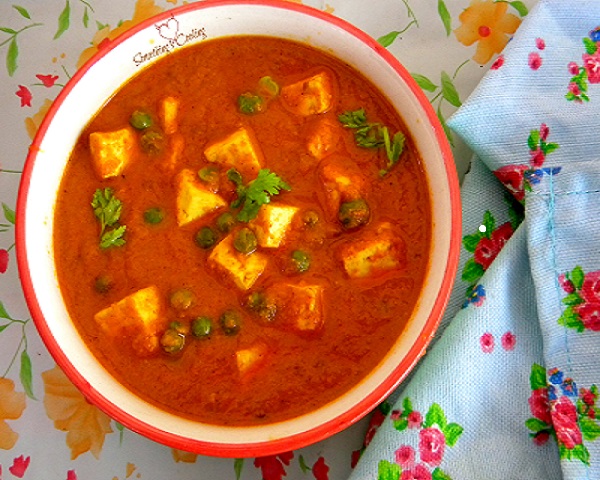

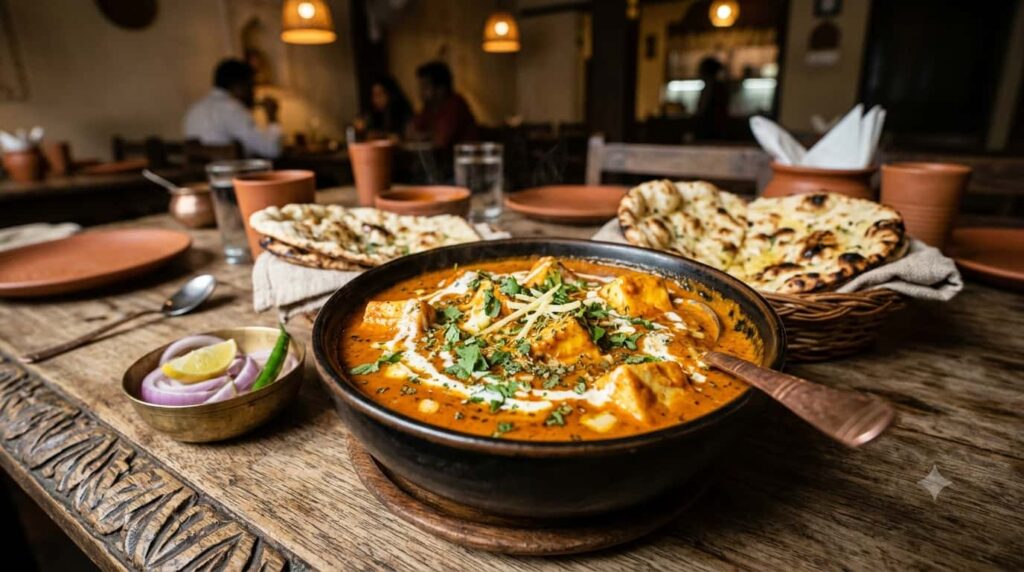
If there’s one paneer dish that never leaves the menu at any Indian restaurant, it’s paneer butter masala. It’s the curry people order even when they can’t decide what to order. Soft paneer cubes sitting in a rich, buttery, tomato-based gravy -mildly sweet, a little tangy, and finished with a swirl of cream. It just works, every single time.
The good news is you don’t need a restaurant kitchen to make it taste like one. This paneer butter masala recipe uses everyday ingredients, a few simple techniques, and gives you that same smooth, restaurant-style gravy at home. I’ve also added the small details -like why your gravy sometimes turns out watery or why the paneer goes chewy -that most recipes skip.
Whether you know it as paneer makhani, butter paneer, or simply the “orange curry,” this is the same comforting Indian cottage cheese curry, and this recipe will help you get it right the first time.
What Is Paneer Butter Masala?
Table of Contents
Paneer butter masala is a North Indian curry made by simmering paneer (Indian cottage cheese) in a creamy tomato and cashew-based gravy, finished with butter and cream. It’s often confused with paneer makhani, and honestly, in most home kitchens, they’re made almost the same way. Some cooks say makhani is slightly milder and sweeter, while butter masala has a touch more spice -but the difference is small enough that you can use both names for this same recipe.
It’s said to have been created as the vegetarian cousin of butter chicken, using paneer instead of chicken in that same buttery tomato gravy. Over the years, it’s become one of the most-ordered vegetarian curries in Indian restaurants, both in India and abroad.
Why This Recipe Works
- No canned shortcuts -the gravy gets its richness naturally from tomatoes, cashews, and butter, not tomato ketchup or store-bought paste.
- Restaurant-style texture -a properly blended, strained gravy that’s smooth, not chunky.
- Balanced flavour -not overly sweet, not too tangy, with just enough spice to keep it interesting.
- Beginner-friendly steps -no confusing techniques, just clear steps anyone can follow, even on a first try.
Ingredients You’ll Need
This recipe serves 4 people as a side dish.
For the gravy:
- 4 large ripe tomatoes, roughly chopped (about 400g)
- 15–18 cashew nuts (soaked in warm water for 15 minutes)
- 1 medium onion, roughly chopped
- 4–5 garlic cloves
- 1-inch piece of ginger
- 2 green cardamoms
- 1 bay leaf
- 1-inch cinnamon stick
- 2 tablespoons butter
- 1 tablespoon oil (this keeps the butter from burning)
- 1 teaspoon Kashmiri red chilli powder (for colour, not too much heat)
- 1/2 teaspoon turmeric powder
- 1 teaspoon coriander powder
- 1/2 teaspoon garam masala
- Salt to taste
- 1/2 to 1 teaspoon sugar (adjust based on how tangy your tomatoes are)
- 1 tablespoon kasuri methi (dried fenugreek leaves), crushed between your palms
- 2–3 tablespoons fresh cream
- Water, as needed to adjust consistency
For the paneer:
- 250 grams paneer, cut into cubes
- 1 tablespoon butter (for pan-frying, optional but recommended)
For garnish:
- A small knob of butter
- A drizzle of cream
- Fresh coriander leaves, chopped
How to Make Paneer Butter Masala (Step-by-Step)
Step 1: Prepare the Tomato-Cashew Base
Heat 1 tablespoon of butter in a pan. Add the bay leaf, cinnamon, and cardamom, and let them sizzle for a few seconds until you can smell the aroma. Add the chopped onion, ginger, and garlic, and sauté until the onion turns soft and slightly golden.
Now add the chopped tomatoes and the soaked cashews. Add a pinch of salt (this helps the tomatoes cook faster and release their juices) and cook on medium heat for 8–10 minutes, until the tomatoes turn mushy and the raw smell disappears completely. This step matters more than people realise -undercooked tomatoes will make your gravy taste sour and raw, no matter how much cream you add later.
Let this mixture cool down a bit, then remove the whole spices (bay leaf and cinnamon stick) and blend everything into a smooth, fine paste. For that silky restaurant-style texture, pass the puree through a strainer to remove any tomato skin or seeds.
Step 2: Cook the Gravy
In the same pan, heat 1 tablespoon butter with a little oil. Add the strained tomato-cashew puree carefully -it tends to splutter, so keep the heat medium and stand a little back.
Cook this puree for 6–8 minutes, stirring often, until it thickens and you see the butter or oil separating slightly at the edges. This is the sign that your masala base is cooked properly.
Add the turmeric, Kashmiri chilli powder, coriander powder, salt, and sugar. Mix well and cook for another 2 minutes so the spices blend into the gravy rather than sitting on top of it.
Step 3: Adjust Consistency and Add Paneer
Add water little by little to bring the gravy to your preferred consistency -not too thick, not runny. Restaurant-style gravy is usually medium-thick, enough to coat the back of a spoon.
Let it simmer for 3–4 minutes, then add the paneer cubes. If you’ve pan-fried them lightly in butter beforehand (see tip below), add them now. Simmer gently for another 4–5 minutes so the paneer soaks up the flavour of the gravy. Avoid boiling hard at this stage -it can make the paneer rubbery.
Step 4: Finish It Off
Sprinkle in the crushed kasuri methi and garam masala, and give it a gentle stir. Turn off the heat, then pour in the fresh cream and mix well. Adding cream after switching off the flame keeps it from curdling and keeps the gravy silky.
Top with a small knob of butter, a light drizzle of cream, and freshly chopped coriander leaves before serving.
Prep time: 20 minutes Cook time: 30 minutes Total time: 50 minutes Serves: 4
What to Serve with Paneer Butter Masala
This curry pairs beautifully with:
- Butter naan or garlic naan
- Tandoori roti or plain phulka
- Steamed basmati rice or jeera rice
- A simple side of onion salad (laccha pyaz) and a wedge of lemon
If you’re serving it for a get-together, pair it with dal makhani and a vegetable pulao for a complete, restaurant-style spread.
Tips for the Best Paneer Butter Masala
- Use fresh, soft paneer. Fresh paneer soaks up the gravy well and stays soft. If using store-bought or frozen paneer, soak the cubes in warm water for 10 minutes before adding them to the curry -this brings back their softness.
- Don’t skip soaking the cashews. This helps them blend into a completely smooth paste without any grainy texture in the final gravy.
- Cook the tomatoes fully. If the gravy tastes even slightly sour or raw, it usually means the tomatoes weren’t cooked long enough before blending.
- Lightly pan-fry the paneer before adding it to the gravy. This isn’t compulsory, but frying the cubes in a little butter until they get light golden spots adds a nice texture and stops them from breaking apart in the curry.
- Add cream off the heat. This one simple habit prevents the cream from splitting and keeps your gravy looking smooth and glossy.
- Balance is everything. A good paneer butter masala should taste a little sweet, a little tangy, and mildly spiced -no single flavour should dominate the others.
- Crush the kasuri methi before adding it. Rubbing it between your palms releases its aroma much better than adding it whole.
Common Mistakes to Avoid
- Skipping the straining step: This is what gives restaurant gravies their smooth finish. Skipping it usually leaves a slightly grainy texture from tomato skins and seeds.
- Adding cream while the gravy is boiling: This is the most common reason cream curdles in the curry.
- Overcooking the paneer: Simmering paneer for too long, or boiling the gravy hard after adding it, makes the cubes chewy and rubbery.
- Using too much chilli powder: This curry is meant to be mild and rich, not fiery. Use Kashmiri chilli powder mainly for colour, and control the heat separately with black pepper or a pinch of regular chilli powder if you like it spicier.
- Not tasting and adjusting salt and sugar at the end: Tomatoes vary a lot in sourness, so always taste the gravy before serving and adjust.
Variations You Can Try
- No onion, no garlic version: Skip the onion and garlic entirely and rely on tomatoes, cashews, and spices for flavour. This is closer to the traditional makhani style and works well for festival cooking.
- Dhaba-style with smoky flavour: Place a small piece of hot charcoal in a steel bowl inside the pan with the gravy, drop a little ghee on it, and cover the pan for 2 minutes. This gives the curry a smoky “tandoor” flavour (the dhungar method).
- Healthier version: Replace cream with cashew paste or full-fat milk, and reduce the butter slightly. It won’t be quite as rich, but it’s still delicious.
- Paneer tikka butter masala: Marinate and grill the paneer cubes first (like paneer tikka), then add them to the same gravy for a smokier, more textured version.
- Mushroom or mixed vegetable butter masala: Swap paneer for mushrooms, or add boiled potatoes and peas to the same gravy base for a variation.
- Vegan butter masala: Use tofu instead of paneer, and replace butter and cream with a good plant-based butter and cashew cream.
Storage Instructions
Refrigerator: Store leftover paneer butter masala in an airtight container in the fridge for up to 3 days. The gravy will thicken as it sits -just add a splash of milk or water while reheating to bring back the original consistency.
Freezer: You can freeze the gravy separately (without the paneer) for up to a month. Thaw it in the fridge overnight, then reheat gently and add fresh paneer cubes when serving. Freezing the paneer along with the gravy can change its texture slightly.
Reheating: Warm it slowly on low heat, stirring often, rather than microwaving on high, which can make the paneer rubbery.
Frequently Asked Questions
They’re extremely close. Both use a tomato, cashew, butter, and cream base. Paneer makhani is traditionally a touch sweeter and milder, while paneer butter masala can have slightly more spice. In most homes and restaurants, the two names are used for the same curry.
Yes. You can replace cashews with a mix of soaked melon seeds (magaz) or a splash of full-fat milk for creaminess, though cashews give the smoothest texture.
You can, but cream is recommended because it blends smoothly and doesn’t curdle as easily. If using yoghurt, whisk it well and add it off the heat, stirring continuously.
This usually happens when the tomato mixture isn’t cooked down enough before blending, or too much water is added while adjusting consistency. Let the puree cook until it visibly thickens before adding water.
Yes, and it actually tastes better the next day once the flavours have had time to sit. Just add the cream and kasuri methi fresh when reheating for the best taste.
Firm tofu works as a good substitute. Pan-fry it lightly the same way you would paneer before adding it to the gravy.
No, it’s meant to be mild, rich, and slightly sweet. If you prefer more heat, you can add extra black pepper or green chillies while cooking.
Once you’ve made this at home, you’ll notice it’s really the small steps -cooking the tomatoes fully, straining the gravy, and adding the cream at the end -that make all the difference between an average curry and a proper restaurant-style paneer butter masala. Serve it hot with butter naan, and you’ve got a meal that feels special even on an ordinary weeknight.

Meena Devi is a home cook and recipe creator who has been cooking and sharing traditional Indian recipes since 2005. With years of hands-on experience in the kitchen, she loves turning everyday ingredients into simple, flavorful dishes that anyone can make at home.
Her recipes are based on tried-and-tested cooking methods, family favorites, and the everyday food she has prepared over the years. Through Sawad India Ka, Meena shares practical recipes, helpful cooking tips, and the flavors she grew up with.