
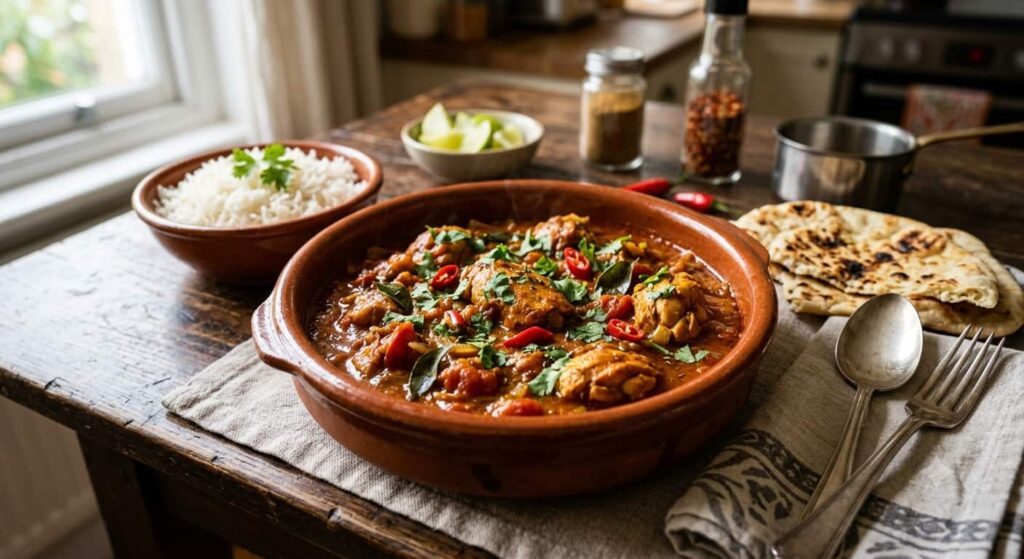
If you love spicy, deep-flavoured curries but don’t want to spend your whole evening in the kitchen, this chicken madras curry recipe is exactly what you need. It’s got that rich, restaurant-style gravy, a good kick of heat, and a lovely tang that makes you want to mop up every last bit with naan or rice.
The best part? You don’t need any fancy ingredients or hard-to-find spices. Everything here is easily available in your local kirana store, and the whole dish comes together in under an hour. Whether you’re craving a South Indian chicken curry with real depth of flavour or just want an easy chicken madras recipe for a weeknight dinner, this one’s got you covered.
What Is Chicken Madras Curry?
Table of Contents
Madras curry gets its name from Madras (now Chennai), and it’s known as one of the spicier curries in Indian cooking. Interestingly, the “chicken madras” that most people know today from restaurant menus is actually a British-Indian restaurant creation -chefs in the UK took the bold, chilli-forward flavours associated with South Indian cooking and turned it into a curry house classic.
That said, the flavour profile is unmistakably rooted in South Indian ingredients: curry leaves, mustard seeds, dried red chillies, and a generous hit of black pepper. The result is a curry that’s hot, slightly tangy, and deeply aromatic -nothing like the milder, creamier curries you might be used to.
This recipe blends both worlds. It gives you that authentic chicken madras curry taste while keeping the method simple enough for anyone to follow, even if you’ve never cooked Indian food before.
Why You’ll Love This Recipe
- It’s ready in under 60 minutes, most of it hands-off simmering time.
- You can easily adjust the spice level up or down.
- It uses everyday ingredients -no special shopping trip required.
- The gravy tastes like it’s been simmering for hours, even though it hasn’t.
- It reheats beautifully, so it’s great for meal prep too.
Ingredients You’ll Need
Here’s everything you’ll need to make this spicy chicken curry recipe. Measurements below serve 4 people generously.
For the Chicken Marinade
- 500g boneless chicken (thigh or breast), cut into medium chunks
- 1/2 tsp turmeric powder
- 1/2 tsp red chilli powder
- 1 tsp lemon juice
- Salt to taste
For the Madras Curry Base
- 3 tbsp oil (vegetable or mustard oil)
- 1 tsp mustard seeds
- 10-12 fresh curry leaves
- 2 medium onions, finely chopped
- 1 tbsp ginger-garlic paste
- 2 green chillies, slit
- 2 medium tomatoes, pureed
- 1 tbsp tomato paste (optional, for extra depth)
Spice Mix
- 2 tbsp Madras curry powder (store-bought or homemade -see notes below)
- 1 tsp coriander powder
- 1/2 tsp cumin powder
- 1/2 tsp fennel powder
- 1/4 tsp black pepper powder
- 1/2 tsp garam masala
- Salt to taste
To Finish
- 1/2 cup coconut milk (optional, but recommended to balance the heat)
- 1/2 cup water (adjust for desired gravy consistency)
- 2 tbsp chopped coriander leaves
- 1 tsp lemon juice
How to Make Chicken Madras Curry (Step-by-Step)
Step 1: Marinate the Chicken
In a bowl, mix the chicken pieces with turmeric, chilli powder, lemon juice, and salt. Let this sit for at least 15-20 minutes. If you have time, marinate it for an hour in the fridge -it makes a noticeable difference to the flavour.
Step 2: Temper the Spices
Heat oil in a heavy-bottomed pan or kadai on medium heat. Once hot, add the mustard seeds and let them splutter. Add the curry leaves right after -they’ll crackle a bit, which is normal.
Step 3: Cook the Onions
Add the chopped onions and cook until they turn golden brown, about 8-10 minutes. Don’t rush this step -well-browned onions are the base of a good curry and add natural sweetness that balances the heat.
Step 4: Add Aromatics
Stir in the ginger-garlic paste and green chillies. Cook for another minute until the raw smell disappears.
Step 5: Build the Gravy
Add the tomato puree (and tomato paste, if using) and cook until the oil starts separating from the mixture. This usually takes 5-7 minutes on medium heat.
Step 6: Add the Spices
Lower the heat and add the Madras curry powder, coriander powder, cumin powder, fennel powder, and black pepper. Cook for 1-2 minutes, stirring constantly so the spices don’t burn.
Step 7: Cook the Chicken
Add the marinated chicken pieces and mix well so every piece is coated in the masala. Cook on medium heat for 5 minutes, stirring occasionally.
Step 8: Simmer
Add water and coconut milk (if using), cover, and let it simmer on low heat for 15-20 minutes, or until the chicken is fully cooked and tender. Stir occasionally to make sure nothing sticks to the bottom.
Step 9: Finish and Serve
Sprinkle in the garam masala, lemon juice, and fresh coriander. Give it one final stir, taste for salt, and turn off the heat.
Prep time: 20 minutes Cook time: 35 minutes Total time: 55 minutes Serves: 4
What to Serve with Chicken Madras Curry
This curry pairs beautifully with:
- Steamed basmati rice or jeera rice
- Soft naan, roti, or paratha
- A cooling side like cucumber raita or kachumber salad
- Papad for some crunch
If you want to lean into the South Indian chicken curry angle, try it with plain rice and a spoon of ghee on top -it’s a simple combination that lets the curry shine.
Tips for the Best Chicken Madras Curry
- Brown the onions properly. This is the single biggest flavour builder in the whole dish. Rushed, pale onions will leave your curry tasting flat.
- Use bone-in chicken for extra flavour. If you don’t mind the extra cooking time, bone-in chicken thighs give the gravy a richer taste.
- Don’t skip the curry leaves. They give this curry its distinct South Indian character -dried ones work in a pinch, but fresh is always better.
- Adjust heat with coconut milk. If the curry turns out spicier than you’d like, a splash of coconut milk mellows it out without diluting the flavour.
- Let it rest. Like most curries, this tastes even better after sitting for 15-20 minutes, as the flavours have time to settle.
Common Mistakes to Avoid
- Adding spices to hot oil straight away: This burns them quickly and makes the curry taste bitter. Always add whole spices first, then lower the heat before adding ground spice powders.
- Skipping the marination: Even a short 15-minute marinade helps the chicken absorb flavour and stay tender.
- Using watery tomato puree without cooking it down: If you add tomatoes and rush straight to the next step, the curry will taste raw and sour. Cook until the oil visibly separates.
- Overcooking the chicken: If you’re using chicken breast, keep an eye on the simmering time -it can dry out faster than thigh meat.
- Using stale spice powders: Madras curry powder loses its punch over time. If yours has been sitting in the pantry for over a year, it’s worth replacing.
Variations You Can Try
- Restaurant style chicken madras: Use a store-bought Madras curry paste instead of individual spices, and finish with a touch of cream for that glossy curry-house look.
- Vegetarian version: Swap chicken for paneer, boiled potatoes, or a mix of vegetables like cauliflower and peas.
- Lamb or mutton madras: Works wonderfully with this same base -just extend the simmering time until the meat is tender.
- Extra spicy chicken curry recipe: Add an extra green chilli or a pinch of Kashmiri red chilli powder for colour and heat without overpowering the taste.
- Coconut-free version: If you prefer a drier, more intensely spiced curry, skip the coconut milk entirely and let the tomato-onion base carry the dish.
How to Store and Reheat
Refrigerating: Let the curry cool completely, then store it in an airtight container in the fridge for up to 3 days.
Freezing: This curry freezes well for up to 2 months. Freeze in individual portions so you can thaw only what you need.
Reheating: Warm it gently on the stovetop over low heat, adding a splash of water if the gravy has thickened too much. Avoid microwaving on high, as it can make the chicken rubbery.
Frequently Asked Questions
Chicken madras is known for being spicier and slightly tangier than curries like korma or tikka masala. It typically uses dried red chillies, black pepper, and curry leaves, giving it a bolder, more South Indian flavour profile.
It’s on the hotter end compared to most curry house dishes, but you can easily control the heat by adjusting the number of green chillies and the amount of curry powder you use.
Yes, you can make your own blend using coriander, cumin, fennel, black pepper, dried red chillies, and a small amount of fenugreek seeds, ground together. Store-bought curry powder works just as well if you’re short on time.
No, it’s optional. Traditional versions often skip it, but adding coconut milk gives the curry a slightly rounder, creamier texture and helps balance the spice.
Absolutely. In fact, curries like this taste even better the next day once the spices have had time to develop.
The restaurant version tends to be thicker and often includes cream or a pre-made base gravy for consistency. The more authentic South Indian approach relies on freshly ground spices, curry leaves, and a tomato-onion base without shortcuts.
Yes, though thigh meat holds up better during simmering and stays juicier. If using breast, reduce the simmering time slightly to avoid drying it out.
This chicken madras curry recipe brings together bold, authentic flavours with a method that’s genuinely easy to follow, even if you’re cooking Indian food for the first time. Once you’ve made it a couple of times, you’ll find yourself adjusting the spice levels and tweaking it to suit your own taste -which is exactly how a good curry recipe should work.

Meena Devi is a home cook and recipe creator who has been cooking and sharing traditional Indian recipes since 2005. With years of hands-on experience in the kitchen, she loves turning everyday ingredients into simple, flavorful dishes that anyone can make at home.
Her recipes are based on tried-and-tested cooking methods, family favorites, and the everyday food she has prepared over the years. Through Sawad India Ka, Meena shares practical recipes, helpful cooking tips, and the flavors she grew up with.