
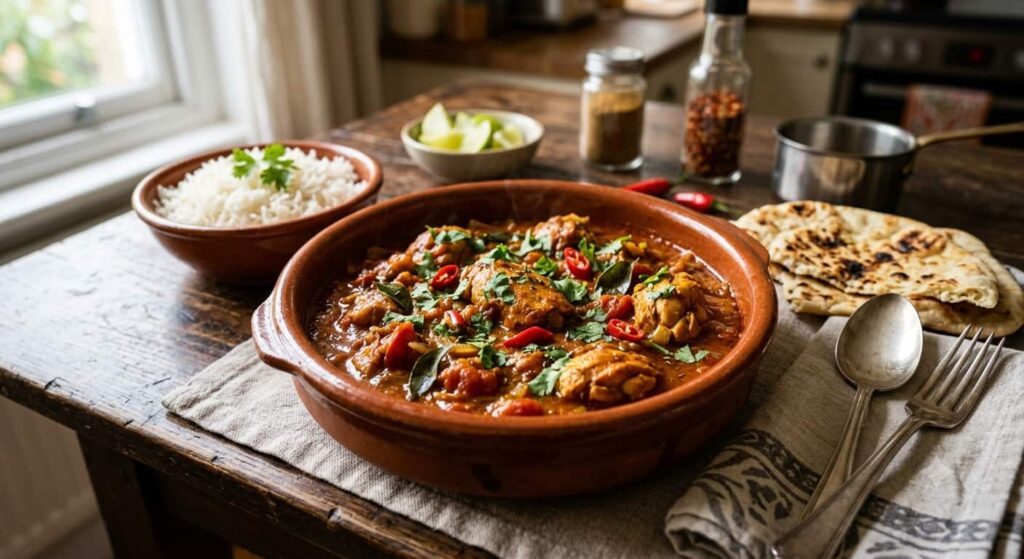
If you’ve ever eaten at a Goan restaurant, chances are Chicken Vindaloo was the dish everyone fought over. It’s tangy, it’s spicy, and it has this deep red colour that makes you want to mop up every last bit of gravy with rice or bread. But here’s the thing -most of us have only had the “restaurant version,” which is usually way too oily and way too vinegary. It’s rarely close to what’s actually cooked in Goan homes.
This chicken vindaloo recipe is the real deal. It comes from the classic Goan method -a fresh ground masala paste made with dried red chillies, garlic, vinegar, and warm spices, marinated overnight and slow-cooked until the chicken is fall-apart tender. No shortcuts, no bottled paste, no store-bought garam masala doing all the work.
By the end of this post, you’ll know exactly how to make chicken vindaloo from scratch, what mistakes to avoid, how to adjust the spice level, and how to store leftovers so they taste just as good the next day (honestly, vindaloo tastes even better on day two).
What Is Chicken Vindaloo, Really?
Table of Contents
Vindaloo has Portuguese roots. The name comes from “carne de vinha d’alhos” -a Portuguese dish of meat marinated in wine and garlic. When the Portuguese settled in Goa, wine wasn’t easily available, so local cooks swapped it for palm vinegar and toddy, and added Indian spices like red chillies, cumin, and cinnamon to the mix. Over time, it became one of Goa’s most iconic dishes.
Here’s something that surprises a lot of people: authentic vindaloo isn’t meant to be blisteringly hot. It’s spicy, yes, but the real character of the dish comes from the balance of heat, tang, and a slight sweetness -not from pure chilli firepower. If your vindaloo tastes like straight-up vinegar and nothing else, something’s off in the recipe.
Traditionally, vindaloo is made with pork. But chicken vindaloo has become just as popular, especially since it cooks faster and is easier to find good chicken than good pork in most places.
Ingredients You’ll Need
For the Vindaloo Paste
- 10-12 Kashmiri dried red chillies (deseeded, for colour and mild heat)
- 4-5 dried red chillies, spicier variety like Byadgi or regular (adjust to taste)
- 8-10 garlic cloves
- 1-inch piece ginger
- 1 teaspoon cumin seeds
- 1 teaspoon black peppercorns
- 4-5 cloves
- 1-inch cinnamon stick
- 4-5 green cardamom pods
- 1 teaspoon mustard seeds
- 1/2 teaspoon turmeric powder
- 1/4 cup malt or coconut vinegar (regular white vinegar works too)
- 1 teaspoon sugar or jaggery
- Salt to taste
- 2-3 tablespoons water (to help grind)
For the Curry
- 800 g bone-in chicken curry cut pieces (bone-in gives more flavour, but boneless works if you prefer)
- 2 medium onions, finely sliced
- 2 medium tomatoes, finely chopped
- 8-10 curry leaves (optional, but adds a nice background flavour)
- 3 tablespoons oil (mustard oil or any neutral oil)
- 1 cup water (adjust for desired gravy consistency)
- Salt to taste
- Fresh coriander leaves, for garnish
How to Make Chicken Vindaloo (Step-by-Step)
Step 1: Soak and Grind the Chillies
Soak all the dried red chillies in hot water for 15-20 minutes until they soften. This makes them easier to grind and stops the paste from turning gritty. Drain the water before grinding.
Step 2: Make the Vindaloo Paste
In a blender, add the soaked chillies, garlic, ginger, cumin seeds, peppercorns, cloves, cinnamon, cardamom, mustard seeds, turmeric, vinegar, sugar, and salt. Blend into a smooth, thick paste. Add water only a tablespoon at a time -you want the paste thick, not runny.
This is the heart of the recipe, so don’t rush this step. A well-balanced paste is what separates a good vindaloo from a great one.
Step 3: Marinate the Chicken
Rub about two-thirds of the vindaloo paste all over the chicken pieces. Cover and refrigerate for at least 2 hours, though overnight is best if you have the time. Keep the remaining paste aside -you’ll need it later.
Marination is where the real flavour builds. If you’re short on time, even a 30-minute rest will help, but the difference between a 30-minute marinade and an overnight one is noticeable.
Step 4: Cook the Onions
Heat oil in a heavy-bottomed pan or kadai. Add the sliced onions and cook on medium heat until golden brown -this usually takes 10-12 minutes. Don’t rush this either; well-browned onions add sweetness and depth to the base of the curry.
Step 5: Build the Curry Base
Add the curry leaves and chopped tomatoes to the browned onions. Cook until the tomatoes turn soft and the oil starts separating from the masala, about 6-8 minutes.
Step 6: Add the Chicken
Add the marinated chicken along with the remaining vindaloo paste. Mix well and cook on medium-high heat for 5-6 minutes, stirring occasionally, until the chicken changes colour and the raw smell of the spices fades.
Step 7: Simmer
Add 1 cup of water (more if you like a thinner gravy), and salt to taste. Bring it to a boil, then reduce the heat to low, cover, and let it simmer for 25-30 minutes, stirring occasionally, until the chicken is tender and the oil floats on top.
If you’re using boneless chicken, check at the 15-minute mark since it cooks faster.
Step 8: Final Check and Garnish
Taste and adjust salt, tang, or heat as needed. If the gravy looks too thin, simmer uncovered for a few more minutes. Garnish with fresh coriander leaves before serving.
Total time: 30 minutes prep + 2 hours marination + 40 minutes cooking Serves: 4
What to Serve with Chicken Vindaloo
Chicken vindaloo pairs best with something plain that can soak up the gravy without competing with its flavour:
- Steamed rice – the classic combination, especially in Goan households
- Sannas – soft, fluffy Goan rice cakes, a traditional pairing
- Neer dosa or plain dosa – a South Indian twist that works surprisingly well
- Crusty bread or pav – great for scooping up the gravy
- A simple cucumber-onion salad on the side to cut through the richness
Tips for the Best Chicken Vindaloo
- Use bone-in chicken if you can. The bones release flavour into the gravy as it simmers, giving you a richer curry.
- Don’t skip the browning of onions. This step builds the base flavour and adds natural sweetness that balances the vinegar.
- Toast your whole spices lightly before grinding if you have a couple of extra minutes -it deepens the flavour of the paste noticeably.
- Let the paste rest. If you can make the vindaloo paste an hour or two before you plan to marinate, the flavours meld together better.
- Balance is everything. If it tastes too sharp or sour after cooking, a small pinch of sugar or jaggery evens it out without making the dish sweet.
- Adjust chillies, not vinegar, to control heat. Reducing vinegar changes the whole character of the dish. Instead, use fewer spicy chillies and more Kashmiri chillies for colour without excess heat.
Common Mistakes to Avoid
- Using too much vinegar. More vinegar doesn’t mean more authentic. It just makes the curry sour and unbalanced. Stick to the measurements and adjust only slightly.
- Skipping the marination. This is the step people cut corners on most, and it’s the one that matters most for flavour.
- Rushing the onions. Half-cooked, pale onions leave the gravy tasting raw and flat.
- Grinding the paste too thin. A watery paste won’t coat the chicken properly and the flavours won’t develop the same way.
- Using pre-ground garam masala instead of whole spices. Freshly ground spices make a real difference in a dish where the paste is the star.
- Not tasting and adjusting at the end. Every batch of chillies and vinegar is a little different in strength, so always taste before you serve.
Variations You Can Try
- Goan Pork Vindaloo: Swap chicken for pork shoulder or belly. It needs a longer simmer, around 45-60 minutes, until the meat is tender.
- Vindaloo with Potatoes: Add cubed, par-boiled potatoes in the last 10 minutes of cooking. This is a popular home-style variation that stretches the dish and soaks up extra gravy.
- Milder Vindaloo: Use only Kashmiri chillies and skip the spicier variety altogether. You’ll still get the colour and tang, just with less heat.
- Vegetarian Version: Use the same vindaloo paste with paneer, mushrooms, or mixed vegetables instead of chicken. Reduce the cooking time accordingly.
- Vinegar-Free Vindaloo: If you’re out of vinegar, tamarind pulp or lemon juice can stand in, though the flavour will be slightly different from the traditional version.
How to Store and Reheat Chicken Vindaloo
Chicken vindaloo actually tastes better the next day, once the spices have had time to sit and settle into the gravy.
- Refrigerator: Store in an airtight container for up to 3-4 days.
- Freezer: Freezes well for up to 2 months. Cool completely before freezing, and thaw overnight in the fridge before reheating.
- Reheating: Warm it gently on the stovetop over low heat, adding a splash of water if the gravy has thickened too much. Avoid microwaving on high, as it can make the chicken rubbery.
Frequently Asked Questions
It’s medium-hot rather than fiery. The heat level popularised abroad is often exaggerated compared to what’s actually served in Goan homes and local restaurants. You can easily dial the spice up or down by adjusting the ratio of hot chillies to Kashmiri chillies.
Yes, though vinegar is what gives vindaloo its signature tang, so leaving it out changes the flavour. Tamarind pulp or lemon juice are the closest substitutes if you’re out of vinegar.
Regular curries usually rely on a base of onion-tomato masala with garam masala. Vindaloo’s identity comes from the vinegar marinade and the specific spice paste, which gives it a tangier, sharper flavour that most other Indian curries don’t have.
Absolutely. The paste keeps well in the refrigerator for up to 2 weeks in an airtight jar, with a thin layer of oil on top to seal it. You can also freeze it in small portions for up to 3 months.
This usually happens when too much vinegar goes into the paste or when low-quality vinegar with a sharp bite is used. Stick to the recommended quantity, and balance it out with a small pinch of sugar or jaggery if needed.
You can, but chicken breast tends to dry out during the simmering process since it has less fat. If you do use breast pieces, reduce the simmering time and check doneness earlier.
Chicken vindaloo is one of those dishes that rewards a little patience -the marination time and the slow simmer are what turn simple ingredients into something that tastes like it came straight out of a Goan kitchen. Once you’ve made the vindaloo paste from scratch, you’ll notice how different it is from anything you get at a restaurant. Give this recipe a try, and don’t be afraid to adjust the heat and tang to match your own taste.

Meena Devi is a home cook and recipe creator who has been cooking and sharing traditional Indian recipes since 2005. With years of hands-on experience in the kitchen, she loves turning everyday ingredients into simple, flavorful dishes that anyone can make at home.
Her recipes are based on tried-and-tested cooking methods, family favorites, and the everyday food she has prepared over the years. Through Sawad India Ka, Meena shares practical recipes, helpful cooking tips, and the flavors she grew up with.